

Do More Expensive and Complex HVLS Controllers Mean Better?
When looking for an HVLS fan solution, one decision that often causes confusion is choosing the right fan controller. Many manufacturers offer multiple controller options—ranging from basic to advanced—with a variety of features. But are the most expensive and complex controllers always worth it?
The Problem: Too Many Features
At first glance, the advanced features of high-end controllers can seem essential. With each added capability, the decision becomes harder. Do you really need all these extras? Or are they just driving up the cost without delivering meaningful value for your facility?
Common Features of Advanced HVLS Fan Controllers
As you move up in price, HVLS fan controllers often include:
- Support for multiple fans per controller
- Building Automation System (BAS) integration
- Timers and scheduling options
- Touchscreen interfaces or remote access
Some of these features—like BAS integration—can be extremely valuable in facilities where centralized control and automation are important. Others, like scheduling features, may sound helpful but might not be necessary in practice.
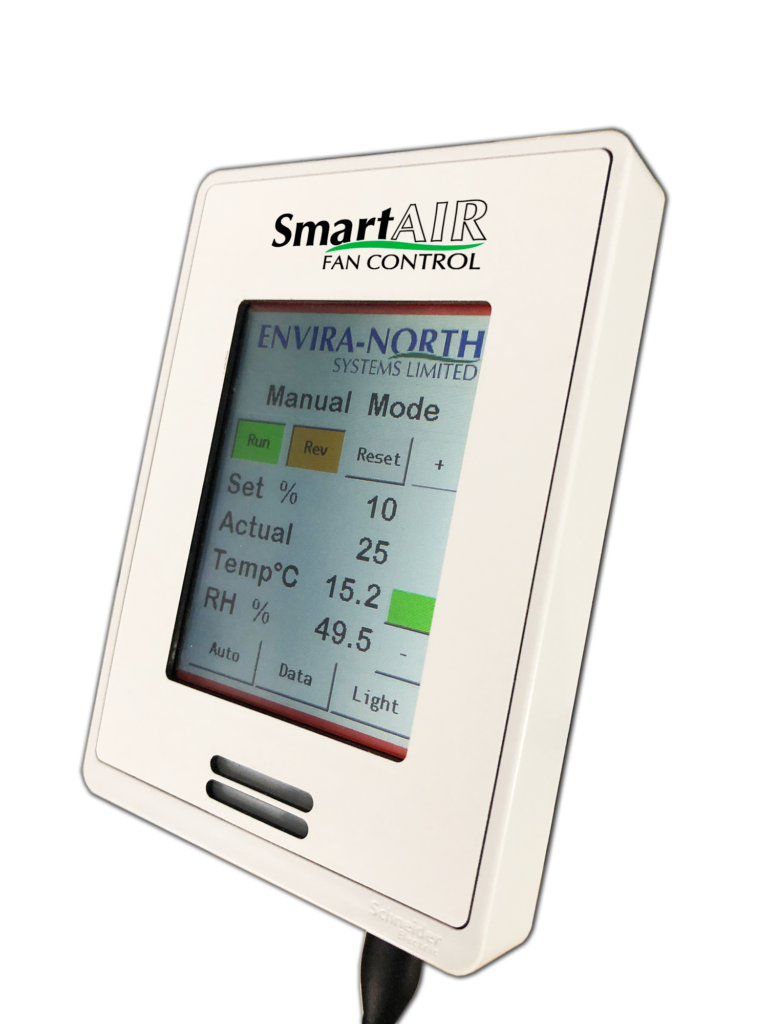
“A more expensive controller can be a smart investment—but only in the right context. “
Are You Paying More Than You Need To?
Let’s look at an example to illustrate why a higher-priced controller may not always be the most efficient choice.
Suppose you’re installing an Envira-North Altra-Air Gearless HVLS fan in a 100′ x 100′ facility. These fans are energy-efficient and cost just pennies per hour to operate. Additionally, in many facilities, the fans are left running throughout the workday or even continuously.
In this case, investing in a controller with complex scheduling or timer functions doesn’t significantly improve energy efficiency. Most building operators simply turn the fan off manually at the end of the day—saving money without sacrificing performance.
When Do Advanced Controllers Make Sense?
A more expensive controller can be a smart investment—but only in the right context. Consider a high-end controller if your facility:
- Requires integration with a Building Automation System
- Needs centralized control of multiple HVLS fans
- Operates in a highly automated or scheduled environment
If none of these apply, a standard or mid-range controller may offer all the functionality you need—at a lower cost.
Final Thoughts: Match the Controller to the Use Case
Expensive and feature-rich HVLS fan controllers aren’t inherently better—they’re better only when the application justifies them. Choosing the right controller starts with understanding your facility’s operational needs and how the fans will be used day to day.
Rather than thinking bigger is better, use advanced control systems if you have:
- Many fans to control
- Automation or BAS integration
- An automated/scheduled environment
By matching the controller to the actual requirements of your space, you’ll make a smarter, more cost-effective investment.
Other Articles You May Find Helpful
1. How to Choose the Right Fan for Your Space – click here.
2. Are More Expensive Ceiling Fans Really Better – click here.
3. Why Choose One Large Fan Instead of Multiple Smaller Fans – click here.